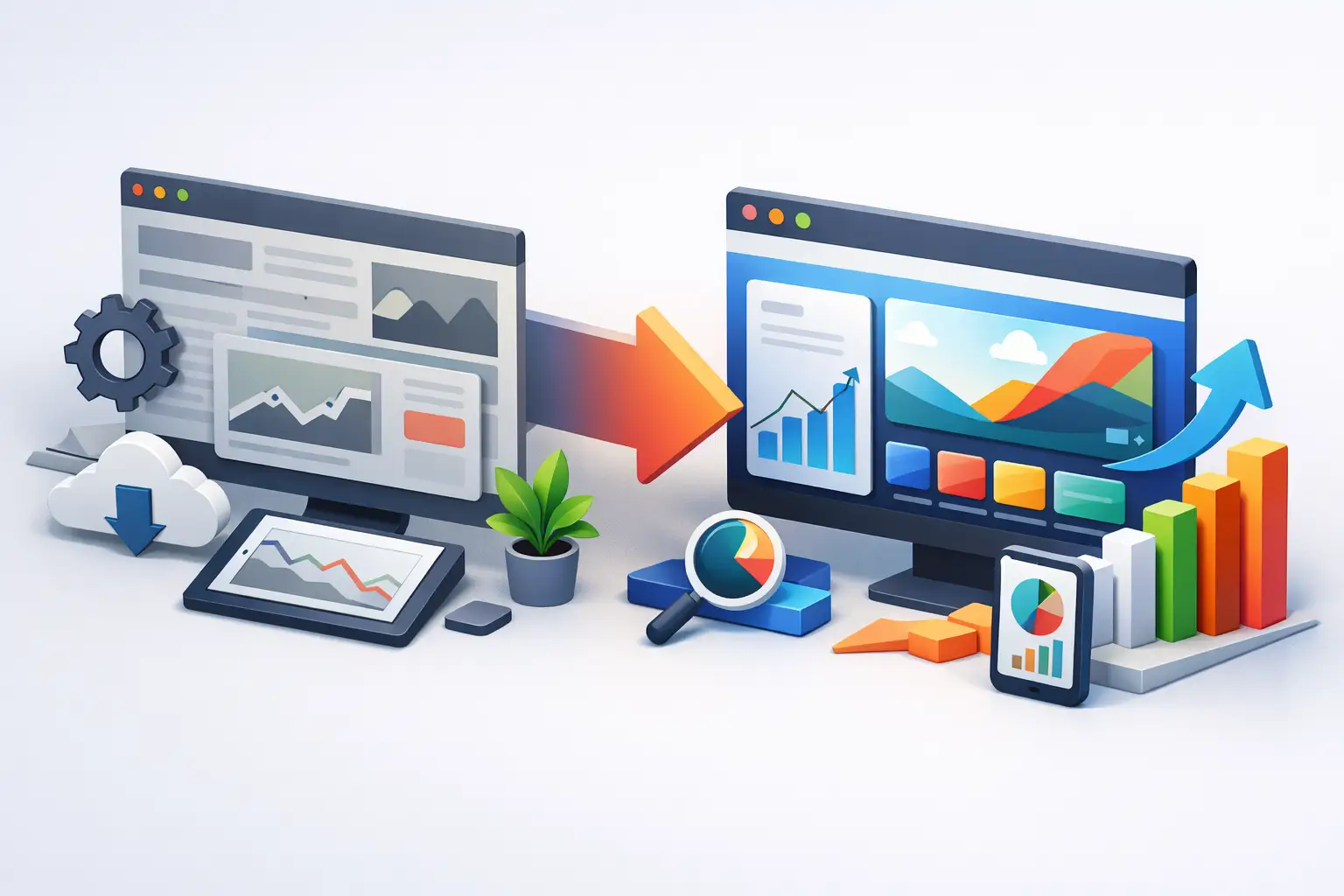
A website redesign before and after should show more than a newer logo, sharper photos, or a modern color palette. It should reveal a business that is easier to find, easier to trust, and easier to contact or buy from. For a growing company, that difference can mean fewer missed leads, stronger search visibility, and a real advantage over competitors still relying on an outdated digital presence.
A redesign is not simply a cosmetic project. It is a business decision. The best results happen when brand strategy, website structure, content, search performance, and conversion goals are considered together from the start.
What a Website Redesign Before and After Should Improve
The “before” version of a website often has recognizable symptoms. It may look dated on mobile, take too long to load, bury key services several clicks deep, or make visitors work too hard to find contact information. Sometimes the site looks acceptable but does not communicate what makes the business different. That is still a conversion problem.
The “after” version should create a clearer path from first visit to action. A visitor should quickly understand who you serve, what you offer, why your business is credible, and what to do next. Whether that next step is booking an estimate, calling your team, visiting a location, or completing a purchase, the website should make it obvious.
Visual improvement matters because people form fast opinions about credibility. But the more valuable change is functional: a redesigned site should support the way customers actually research, compare, and choose a provider.
Before: A Site That Creates Friction
Many small and mid-sized businesses outgrow their first website without noticing it. The company may have added services, expanded its service area, refined its brand, or built a stronger reputation. Yet the website still tells the old story.
Common issues include unclear page hierarchy, inconsistent branding, weak calls to action, generic service copy, poor mobile layouts, and pages that are difficult for search engines to understand. An ecommerce store may have confusing category navigation or an unnecessarily long checkout path. A local service business may have no focused location pages, weak proof of expertise, or a contact form that feels like a dead end.
These problems do not always cause a dramatic drop in traffic. More often, they quietly reduce results. Visitors leave, qualified prospects hesitate, and marketing campaigns send paid or organic traffic to pages that fail to convert.
After: A Site Built Around Decisions
A strong redesign replaces friction with direction. It gives each page a job. The homepage establishes value and trust. Service pages answer buying questions. Case studies, reviews, photography, and credentials provide proof. Contact points appear where visitors naturally need them rather than being hidden in a menu.
For retail brands, that may mean product pages with clearer imagery, better filters, useful product details, and simpler purchasing options. For professional services, it may mean stronger positioning, practical FAQs, and calls to action matched to the buyer’s stage. The right approach depends on the business model, but the goal remains the same: help the right customer make a confident next move.
Design Is Only One Layer of the Transformation
A beautiful redesign that ignores performance can become an expensive brochure. The visual system needs to support business goals, not compete with them.
Branding should be consistent across typography, color, imagery, messaging, and page layout. When every page feels disconnected, visitors can question whether the business is established or organized. A focused brand experience makes the company easier to remember and easier to choose.
Content is equally important. Headlines should lead with the customer benefit, not internal company language. Instead of making visitors decode a vague claim, explain the service, audience, differentiator, and desired action in plain terms. Strong copy brings structure to the page and gives search engines useful context at the same time.
Technical performance also shapes the outcome. Slow pages, broken forms, awkward mobile experiences, duplicate content, and poor site architecture can limit even the most polished design. A redesign is the right time to correct those issues before they continue costing visibility and leads.
Protect Search Visibility During a Redesign
One of the biggest risks in a website redesign is treating SEO as an afterthought. A new site can lose rankings when high-performing pages disappear, page URLs change without redirects, or useful content is removed simply because it does not fit the new layout.
Before development begins, identify the pages that currently earn organic traffic, leads, and backlinks. Review keyword performance, page intent, local visibility, and technical errors. This creates a baseline for measuring the redesign rather than guessing whether the new site is working.
If URLs must change, use proper redirects so visitors and search engines reach the relevant new page. Preserve valuable content where appropriate, improve it where necessary, and avoid copying the same text across multiple service or location pages. A redesign can strengthen SEO significantly, but only when search strategy is part of the build process.
For businesses serving Vancouver, Surrey, Burnaby, Richmond, or other Lower Mainland communities, local search details deserve special attention. Clear service areas, accurate business information, locally relevant content, and pages built around real customer needs can help turn nearby searches into qualified inquiries.
Measure the Right Before-and-After Results
The most compelling website redesign before and after story is supported by meaningful data. Traffic alone is not enough. A rise in visitors is useful only if those visitors are finding the right information and taking valuable actions.
Track the metrics that connect to revenue and growth: qualified form submissions, phone calls, booked consultations, online sales, conversion rate, average order value, keyword visibility, and engagement on high-intent pages. For some companies, a lower traffic number with higher-quality leads is a better result than broad traffic growth from irrelevant searches.
It also helps to define success before the project starts. If the goal is more local leads, the redesigned site should prioritize service pages, proof of trust, location relevance, and direct contact paths. If the goal is ecommerce growth, focus on product discovery, speed, cart completion, merchandising, and repeat purchase opportunities.
There are trade-offs. More detailed pages can improve trust and search depth, but too much information can overwhelm a visitor. Bold creative choices can make a brand distinct, but they should not reduce readability or accessibility. The strongest redesigns balance brand personality with clear usability.
A Better Redesign Process Starts With Strategy
A website should not be redesigned because a competitor changed theirs or because the current design feels old. Those may be signals, but they are not a strategy. Start by identifying what is holding the current site back and what the business needs it to accomplish next.
That means asking practical questions. Which services produce the best leads? Where do visitors exit? What objections prevent prospects from contacting you? Does the website reflect your current positioning? Are marketing campaigns driving visitors to pages designed to convert? The answers guide the structure, content, design, and technology choices.
Ramikar approaches this work as an integrated growth project, bringing brand presentation, web design, search strategy, and conversion priorities into one direction. That matters because a stronger website should not sit apart from your marketing. It should give every campaign, social post, search result, and referral a better place to land.
When It Is Time to Redesign
If your business has changed but your website has not, the gap will eventually become visible to customers. You may hear that prospects could not find a service, see traffic without enough inquiries, or struggle to update content internally. You may also be investing in SEO, paid ads, or social media while sending that attention to a website that does not reflect the quality of your work.
The goal is not to chase design trends. It is to create a digital presence that makes your value clear, earns confidence quickly, and supports measurable growth. A thoughtful redesign gives your business a stronger first impression, but more importantly, it gives every qualified visitor a better reason to act.