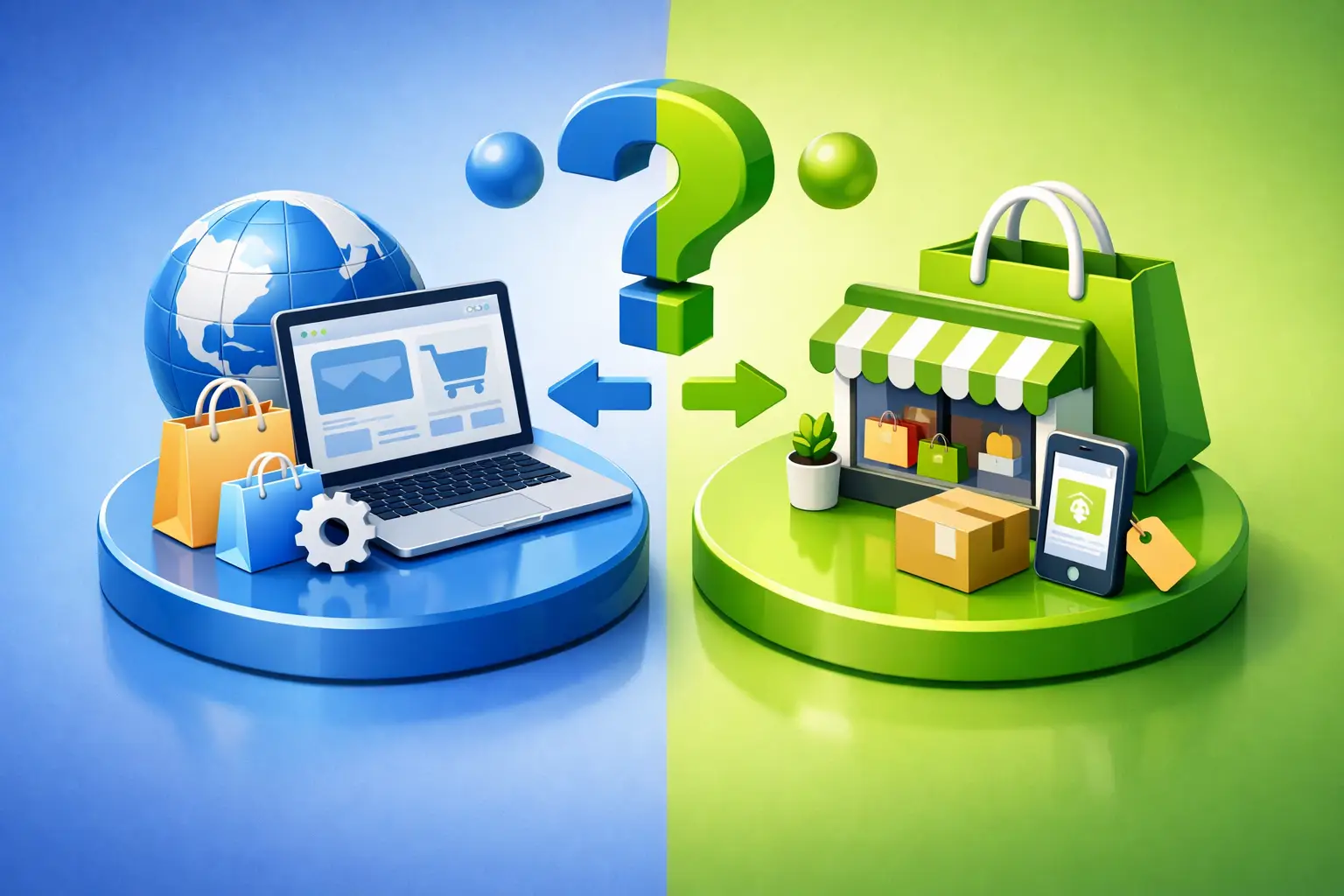
A retail website can look polished and still leave revenue on the table if the platform does not fit the business behind it. The question of WordPress or Shopify for stores is not about picking the most popular name. It is about choosing the system that helps your team sell confidently, manage efficiently, and build a stronger brand presence as the business grows.
For many small and mid-sized retailers, Shopify creates the fastest path to a functioning online store. WordPress, usually paired with WooCommerce, offers more creative and strategic control. Both can support real growth. The right decision depends on how much flexibility, technical involvement, content marketing, and customization your store requires.
Start With the Business Model, Not the Platform
A product catalog is only one part of an ecommerce operation. Your store also needs to reflect your brand, appear in search results, guide shoppers toward a purchase, and give your staff a manageable daily workflow. A boutique selling a focused product line has different needs than a local retailer with hundreds of variations, wholesale pricing, service pages, and an aggressive SEO plan.
Shopify is built specifically for commerce. Its admin dashboard, product management, payments, shipping settings, and checkout are designed to help owners launch and operate a store without assembling every piece from scratch. That simplicity is valuable when speed matters and internal technical resources are limited.
WordPress is a content management system first. To sell products, most businesses use WooCommerce. This combination can become a highly capable ecommerce platform, but it requires more decisions around hosting, plugins, performance, security, and maintenance. In exchange, it gives a business more room to shape the experience around its exact goals.
When Shopify Is the Better Choice for Stores
Shopify is often the stronger choice for businesses that want to get online quickly without turning website management into a second full-time job. Its foundation is standardized, which makes the core store setup easier to understand. Product pages, inventory, shipping, discounts, tax settings, and order fulfillment are all handled from a single place.
That structure is especially useful for stores with a clear catalog and straightforward buying journey. A skincare line, apparel brand, gift shop, specialty food business, or product-focused startup can move faster with Shopify because the essential ecommerce functions are already built into the platform.
Shopify reduces the operational burden
With Shopify, hosting, core security, platform updates, and checkout infrastructure are managed for you. This does not eliminate the need for strategic web support, but it reduces the number of technical responsibilities on your side. For an owner focused on products, customers, and fulfillment, that can be a major advantage.
Shopify also performs well for businesses that sell across channels. If your growth plan includes social commerce, in-person point of sale, marketplaces, or email-based product campaigns, its ecosystem can make those connections easier to manage.
The trade-off is control. Shopify themes can be customized, but extensive design changes or unique functionality may require custom development. Apps can solve many needs, yet adding too many can create higher monthly costs, duplicate features, and a less consistent customer experience.
Shopify works best when speed supports the strategy
A fast launch is not just convenient. It can help a business test demand, start collecting customer data, and establish an online sales channel before competitors gain more ground. If your store needs a reliable buying experience now, Shopify can provide the momentum to move from idea to revenue without unnecessary delays.
When WordPress and WooCommerce Make More Sense
WordPress with WooCommerce is a better fit when your ecommerce website needs to do more than process transactions. It is particularly valuable for businesses where content, search visibility, local relevance, custom design, and lead generation all play major roles in the sales process.
Consider a furniture retailer with detailed buying guides, a specialty supplier with complex product filters, or a local business that sells products while also booking consultations and promoting services. These stores often need a website that functions as a full marketing engine, not only a storefront.
WordPress gives brands more creative control
WordPress offers substantial freedom in page design, content structure, navigation, and functionality. Instead of adapting your brand to a preset ecommerce template, you can build the site around your customer journey. That matters when distinctive design and a premium brand presentation influence whether shoppers trust you enough to buy.
It also gives you more flexibility to create high-value content. Product education, buying guides, comparison pages, location pages, campaign landing pages, and long-form SEO content can all work together to bring qualified visitors into the store. For retailers competing in crowded search results, this can create a meaningful edge.
For businesses serving communities across Vancouver, Burnaby, Surrey, Richmond, or the broader Lower Mainland, WordPress can be particularly useful when local search visibility is part of the growth plan. A store may need to rank for product searches, location-based terms, service-related searches, and branded content at the same time.
WordPress requires stronger ongoing management
The freedom that makes WordPress attractive also creates responsibility. Your hosting must be reliable. Plugins need to be selected carefully, updated regularly, and monitored for compatibility. Site speed, backups, security, and checkout performance require ongoing attention.
This is not a reason to avoid WordPress. It is a reason to treat the website as a business asset rather than a one-time project. With the right development and marketing support, a WordPress store can become a powerful platform for organic visibility, brand distinction, and tailored conversion paths.
WordPress or Shopify for Stores: The SEO Difference
Both platforms can rank well. Search performance is not decided by the logo in your website footer. It is driven by technical health, site architecture, page quality, product information, keyword strategy, internal linking, user experience, and authority.
Shopify gives stores a solid SEO starting point. It handles many fundamentals well and makes it easy to manage titles, descriptions, product URLs, and basic content. For a focused catalog with strong product pages and a disciplined content plan, Shopify can generate meaningful organic traffic.
WordPress generally offers more flexibility for businesses pursuing a broader SEO strategy. It is easier to build highly customized content hubs, landing pages, resource sections, and local pages without forcing every message into a product-first template. That flexibility can matter when search traffic needs to support both ecommerce revenue and lead generation.
The difference is execution. A poorly maintained WordPress site can become slow and difficult to crawl. A Shopify store with thin product descriptions and no content strategy will struggle as well. The platform creates the foundation, but strategy and upkeep determine the result.
Compare the Real Cost, Not Just the Monthly Fee
Shopify has predictable subscription costs, although premium themes, apps, transaction-related fees, and custom development can increase the total investment. Its model is often easier to budget for, especially at the launch stage.
WordPress can appear less expensive because the software itself is free. But a serious ecommerce build includes hosting, a quality theme or custom design, WooCommerce extensions, security tools, maintenance, and development support. Costs vary more because the site is built around your requirements.
The better question is not, “Which platform is cheaper?” Ask which investment supports your next stage of growth. If a simple Shopify store gets you selling quickly, it may offer the strongest early return. If a custom WordPress environment helps you dominate local search, showcase a more complex brand, and reduce limitations later, the higher initial investment may be justified.
Make the Platform Serve the Customer Journey
Choose Shopify if your priority is speed, simplicity, and a dependable ecommerce system with minimal technical overhead. It is ideal when the store itself is the center of the digital strategy and your products can be sold through a clean, direct buying path.
Choose WordPress and WooCommerce if your website must combine ecommerce with advanced content, stronger design flexibility, local SEO, complex integrations, or a custom conversion strategy. It is ideal when your online presence needs to support a larger brand and marketing ecosystem.
A strong store is not defined by the platform alone. It is defined by how clearly it presents your value, how easily customers find what they need, and how effectively it turns attention into action. Build around those priorities, and the technology becomes a competitive advantage instead of a limitation.