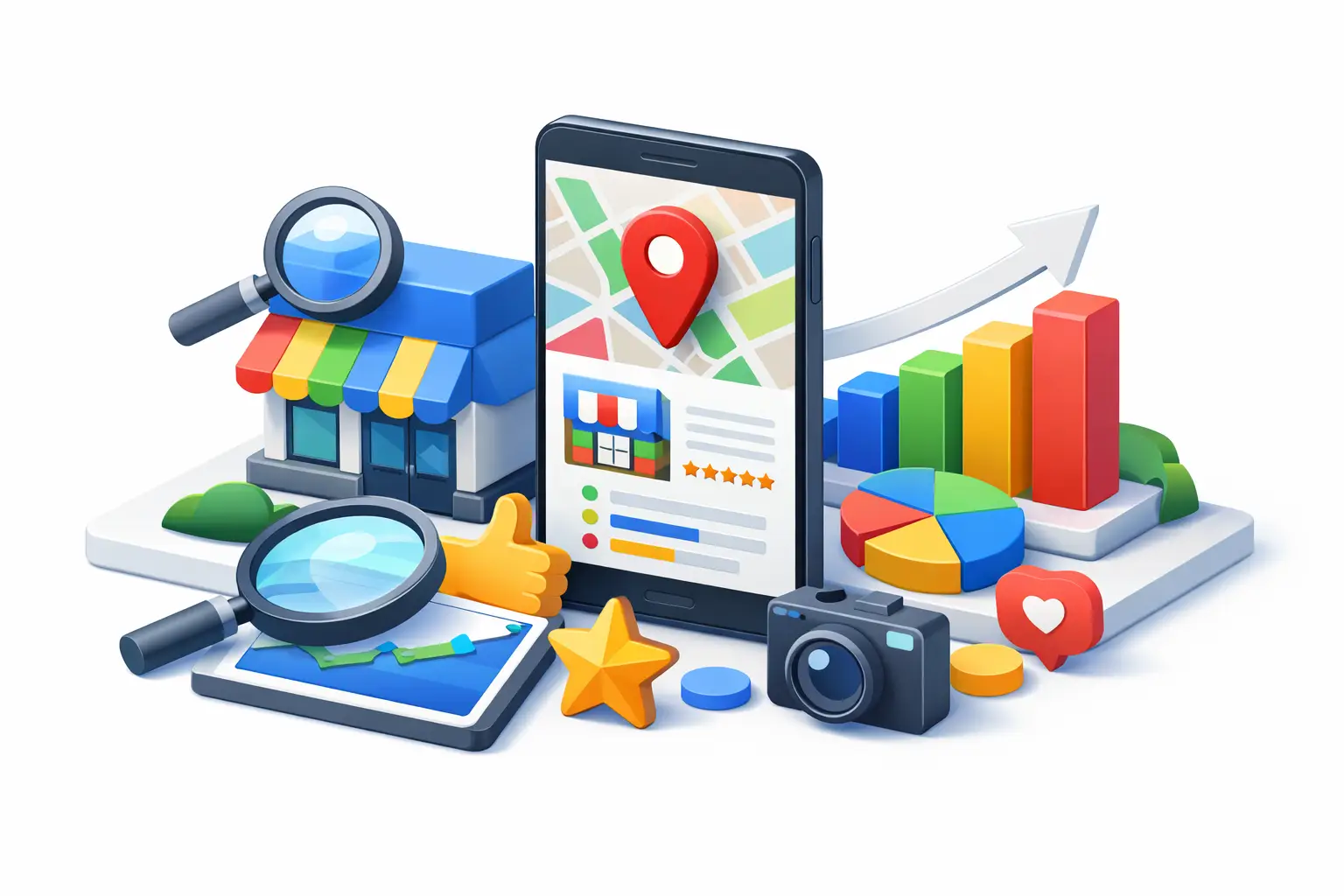
A local customer searches for your service, sees three businesses in the map results, and makes a decision in under a minute. That is where google business profile optimization starts to matter. If your profile looks incomplete, outdated, or thin on trust signals, you are handing leads to a competitor before your website even gets a chance.
For small and mid-sized businesses, this is one of the highest-impact local SEO moves available. A strong profile improves visibility, supports credibility, and creates more ways for people to call, visit, message, and buy. It is not just a listing. It is a conversion asset.
Why google business profile optimization matters
Your Google Business Profile influences how your business appears in local map results, branded searches, and mobile discovery. For service businesses, retail brands, restaurants, clinics, and professional firms, that visibility can drive a steady stream of high-intent traffic.
The key advantage is intent. People searching on Google Maps or local search are usually close to action. They are not browsing casually. They want hours, directions, pricing clues, reviews, or direct contact. When your profile answers those needs quickly, the path from search to sale gets shorter.
It also strengthens your broader digital presence. A polished profile reinforces your brand, supports local relevance, and often sends better-qualified traffic to your site. If your website, reviews, photos, and business information all align, your marketing starts working as one connected system rather than a set of disconnected tactics.
What actually moves the needle
Some businesses treat optimization like a one-time setup. That leaves opportunity on the table. Google rewards accuracy, completeness, activity, and trust. The strongest profiles are maintained, not just claimed.
Your primary category is one of the biggest signals. It tells Google what your business is, which directly affects what searches you can appear for. Secondary categories help broaden relevance, but only when they are accurate. Adding every possible category is not a smart shortcut. It can dilute clarity and hurt the way your profile matches search intent.
Business descriptions matter too, but not in the way many owners assume. This is not the place for keyword stuffing. A good description explains what you do, who you serve, and what makes your business worth choosing. Keep it natural and specific. If you are a local bakery, law firm, or home services company, your wording should reflect the real value customers expect from you.
Then there is consistency. Your business name, phone number, address, hours, and service areas need to be correct everywhere, starting with your profile. If your hours are wrong or your contact details conflict with your website, trust drops fast. Customers notice, and so does Google.
The profile sections most businesses underuse
Photos are often treated like an afterthought, which is a mistake. Strong visuals improve engagement and help customers feel more confident before they contact you. Storefront images, interior shots, team photos, product images, before-and-after examples, and service-in-action photos all add depth. Low-quality or outdated photos send the opposite message.
Products and services are another missed opportunity. These sections help Google understand your offerings and help users scan what you do without digging through your site. This is especially useful for businesses with multiple services or product lines. Clear naming, concise descriptions, and accurate pricing details, when appropriate, can improve both relevance and conversions.
Posts can support visibility and action, but only if used well. Promotions, seasonal updates, events, new services, and timely announcements can keep your profile active. That said, not every business needs constant posting. If you cannot maintain quality, focus first on reviews, photos, and accurate business details. Activity helps, but credibility matters more.
The Q&A section deserves attention too. Many businesses ignore it until a customer posts a question publicly. By then, you are reacting instead of managing your brand. Add common questions yourself and answer them clearly. Think about what customers ask before calling – parking, appointment process, service areas, turnaround time, or whether walk-ins are accepted.
Reviews are not just reputation – they are performance
Reviews influence rankings, click-through rates, and conversion rates. They are one of the clearest trust signals on your profile. Quantity matters, but quality and recency matter just as much.
The best approach is consistent review generation, not occasional bursts. Ask satisfied customers soon after a completed service or purchase. Make the process simple. More importantly, respond to reviews in a way that sounds human and professional. A short, generic reply on every review is better than silence, but thoughtful responses build more confidence.
Negative reviews need a measured approach. Do not get defensive. A calm response shows accountability and gives future customers a better impression than a perfect star rating ever could. In some cases, a business with a few mixed reviews but strong responses looks more credible than one with nothing but vague five-star praise.
How optimization supports rankings and conversions
Google Business Profile optimization is not only about appearing in the local pack. It is about winning the click once you do appear. Your profile title, category match, review signals, business details, images, and recent activity all shape whether a customer chooses you or keeps scrolling.
This is where many businesses lose momentum. They focus only on rankings and ignore presentation. But ranking without conversion is wasted visibility. If your profile earns impressions but your photos are weak, reviews are stale, or your call button leads nowhere, growth stalls.
That is why profile optimization works best when tied to bigger digital assets. Your website should reflect the same services, branding, and business information. Your local landing pages should reinforce your service areas. Your imagery should feel consistent across your profile, site, and social channels. When those pieces align, your brand looks stronger and performs better.
Common mistakes that quietly cost leads
One of the most common mistakes is choosing the wrong primary category. Another is letting outdated hours sit during holidays or seasonal shifts. Businesses also hurt themselves by using poor-quality images, ignoring review responses, or writing descriptions that say very little.
There is also a temptation to over-optimize. That includes adding excessive keywords to service names, selecting irrelevant categories, or making edits too aggressively without a strategy. Google wants clarity and authenticity. If your profile starts looking manipulated, that can create more problems than progress.
For multi-location businesses, duplication and inconsistency are frequent issues. Each location needs its own accurate profile, localized details, and review management process. Copy-pasting the same setup across every branch can flatten your relevance and weaken customer trust.
A smarter approach to google business profile optimization
The strongest approach is part technical, part creative, and part operational. You need clean business data, the right category structure, complete service details, and ongoing review management. But you also need strong visuals, clear messaging, and a profile that reflects how your brand actually wants to be perceived.
That is why this work should not be separated from branding, local SEO, and website performance. A business trying to grow in competitive markets like Vancouver, Burnaby, or Surrey needs more than a claimed profile. It needs a profile built to compete.
At Ramikar, that bigger-picture thinking matters. A Google Business Profile should not sit apart from your website, your brand identity, or your search strategy. When those elements work together, the results are stronger, more measurable, and easier to scale.
What business owners should focus on first
If your profile is underperforming, start with the fundamentals. Make sure every field is complete and accurate. Review your primary and secondary categories. Add real photos that reflect your current business. Strengthen your service and product sections. Create a process for collecting and responding to reviews. Then compare the profile against your website and correct any disconnects.
After that, measure action, not vanity. Track calls, direction requests, website clicks, bookings, and message volume. Those are the signals that tell you whether optimization is translating into business growth.
A polished profile will not fix a weak offer or a poor customer experience. But for a good business with real value, it can dramatically improve how often that value gets seen and chosen. If local visibility matters to your growth, this is one of the smartest places to build momentum – because the next customer looking for what you do is probably deciding right now.