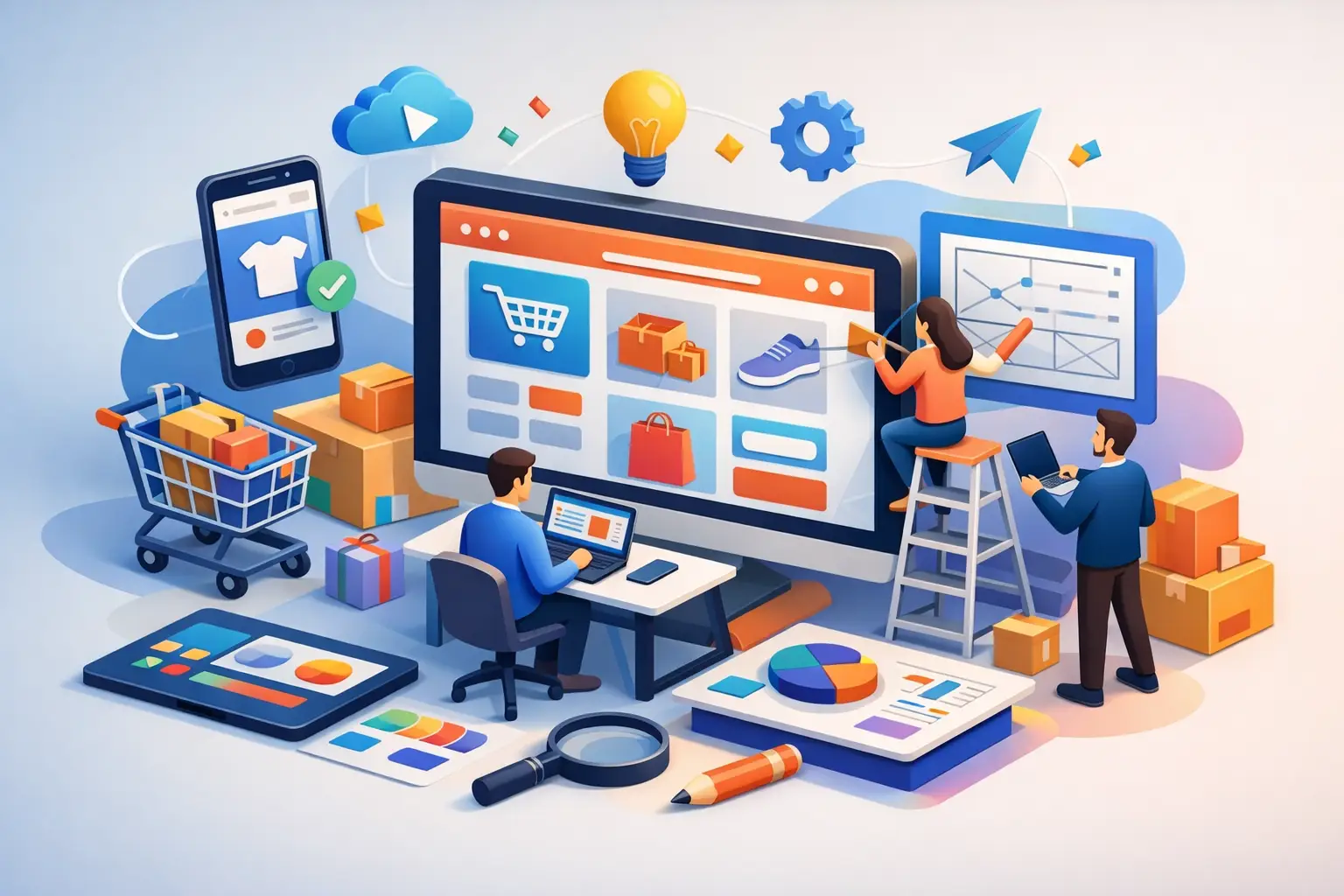
A lot of online stores do not have a traffic problem. They have a conversion problem. Visitors land on the site, browse a few pages, hesitate at the product page or checkout, and leave. That is exactly where an ecommerce website design company can change the trajectory of a business – not by making a store look nicer for its own sake, but by building a shopping experience that earns trust, removes friction, and drives more sales.
For growing brands, ecommerce design is not just about colors, banners, and product grids. It is about how customers move through the site, how quickly they understand the offer, and how easily they can take action. When the design is aligned with branding, SEO, content, and conversion strategy, the website stops being a digital brochure and starts performing like a revenue engine.
Why an ecommerce website design company matters
The biggest mistake many businesses make is treating ecommerce design as a one-time creative project. In reality, your online store sits at the center of customer acquisition and sales. Paid traffic, organic search, social media, email campaigns, and repeat buyers all lead back to the website. If the store is slow, confusing, or visually inconsistent, every marketing effort becomes less effective.
A strong ecommerce website design company looks beyond surface-level visuals. It studies how people shop, what information they need before buying, and where drop-off tends to happen. That means the work often includes site structure, mobile responsiveness, product page layout, category organization, trust signals, calls to action, and checkout flow.
There is also a brand layer to this. A store that feels polished and credible gives customers more confidence to buy. A store that looks generic or outdated can make even a good product feel risky. For small and mid-sized businesses trying to stand out in crowded categories, design becomes part of the competitive edge.
What a good ecommerce website design company actually delivers
A capable partner does more than build pages. It creates alignment between brand presentation and business performance. That usually starts with strategy.
Before any design direction is finalized, the company should understand your products, target audience, sales goals, and market position. A local retailer expanding online has different needs than a fast-scaling direct-to-consumer brand. A company with hundreds of SKUs needs a stronger navigation system than a business with a focused product line. Good design decisions come from business context, not trends.
Brand presentation that supports sales
Branding and ecommerce should work together. If your visual identity is inconsistent, product imagery is weak, or messaging lacks clarity, the site will struggle to convert even if the technical setup is solid. A design company should bring structure to how your brand shows up across homepage messaging, collection pages, product details, and promotional content.
That does not mean every store needs a flashy look. In many cases, the highest-performing ecommerce sites are clean, direct, and easy to shop. The right aesthetic depends on the buyer, price point, and product type. Premium products often need more storytelling and visual refinement. Commodity products may need speed, clarity, and stronger comparisons.
User experience that reduces hesitation
Most abandoned sessions happen for predictable reasons. The site feels hard to navigate. Shipping details are unclear. Product descriptions are thin. The cart experience creates extra steps. Mobile browsing feels cramped. A good ecommerce website design company identifies these points of friction and designs around them.
User experience is where design becomes measurable. Better filtering helps shoppers find what they want faster. Better page hierarchy keeps key product details visible. Better mobile layouts reduce drop-off from phone users. Better checkout design cuts unnecessary exits. These are not cosmetic improvements. They directly affect revenue.
SEO and site structure from the start
This is where many businesses lose momentum. A visually attractive store can still underperform if search visibility was ignored during the build. Ecommerce websites need thoughtful page structure, crawlable content, optimized collections, logical URLs, and technically sound foundations. If design and SEO are handled separately, businesses often end up fixing expensive issues later.
When strategy, design, and optimization are built together, the site is better positioned to attract qualified traffic and convert it. That matters for brands that want long-term growth instead of relying only on paid ads.
How to tell if your current store needs help
You do not need a full redesign just because your site has been live for a few years. But there are clear signs that your ecommerce store is holding your growth back.
If traffic is steady but sales are weak, your design may not be supporting the buying process. If mobile users browse but rarely convert, the mobile experience likely needs attention. If your bounce rate is high on category or product pages, the issue may be message clarity, layout, trust, or speed. If your branding feels disconnected across the website, social media, and marketing materials, customers may be getting an inconsistent impression of the business.
Another sign is internal inefficiency. If updating products is difficult, promotional content is hard to manage, or the site depends on patchwork plugins and workarounds, your store may be limiting your team as much as your customers. A smart redesign should improve backend usability too.
Choosing the right ecommerce website design company
Not every agency is built for ecommerce. Some focus mainly on brochure websites. Others can produce attractive visuals but do not think deeply about search performance, product architecture, or conversion behavior. The right partner should understand that ecommerce is both a design challenge and a sales challenge.
Look for a company that asks practical questions. How do customers find your products? What is your average order value? Where are users dropping off? Are repeat purchases important? How will content, SEO, photography, and promotions support the store after launch? Those questions show the agency is thinking beyond the homepage.
It also helps to work with a team that can support more than one piece of the puzzle. Businesses often get better results when branding, website design, SEO, and marketing execution are connected. That reduces inconsistency, speeds up decision-making, and keeps the website aligned with broader growth goals. For companies across competitive markets like Vancouver and the Lower Mainland, that integrated approach can be the difference between a store that looks decent and one that actually gains traction.
What results should you expect?
A quality ecommerce redesign should improve more than appearance. You should expect a stronger first impression, clearer product presentation, better mobile usability, and a smoother path to purchase. Over time, that can lead to better engagement, higher conversion rates, stronger average order values, and improved marketing efficiency.
That said, results depend on the full business picture. Design alone cannot fix weak product-market fit, uncompetitive pricing, or poor traffic quality. But when the offer is solid, strong design amplifies everything else. It helps your brand look more credible, your products feel more compelling, and your marketing dollars work harder.
There are trade-offs too. A highly customized store may offer more control, but it can require a bigger investment and more planning. A simpler build may launch faster, but it might limit scalability later. The right choice depends on your stage of growth, catalog size, and internal resources.
Ecommerce website design company services should support growth, not just launch
The launch is not the finish line. The best ecommerce website design company treats the website as an evolving sales platform. After launch, there should be room to refine category pages, test calls to action, improve content, add landing pages, strengthen SEO, and support campaigns with fresh creative assets.
That is especially valuable for businesses that do not want to juggle separate vendors for design, development, branding, and digital marketing. A connected agency model creates momentum because each part of the business supports the others. Your store design informs your ads. Your SEO content supports your category pages. Your product visuals strengthen trust. Your brand presentation stays consistent across channels.
That is the advantage of working with a partner that sees ecommerce as part of a larger growth system. Ramikar approaches it this way – combining creative direction, web design, search visibility, and marketing strategy so businesses can build a stronger digital presence without fragmentation.
If your online store is attracting attention but not converting enough of it, the issue may not be your products. It may be the experience around them. The right design partner helps turn that experience into a clearer, stronger path to growth.