A lot of business owners think a website starts with a homepage mockup. It doesn’t. If you are asking what is web design and development process, the real answer starts much earlier – with business goals, audience behavior, and the actions you need visitors to take once they land on your site.
That distinction matters because a website is not just a digital brochure. It is a sales tool, a visibility asset, and often the first serious impression your brand makes. When the process is handled well, your site supports search performance, builds trust, and turns attention into leads or sales. When it is rushed, you usually end up paying twice – once to launch it, and again to fix what was missed.
What is web design and development process?
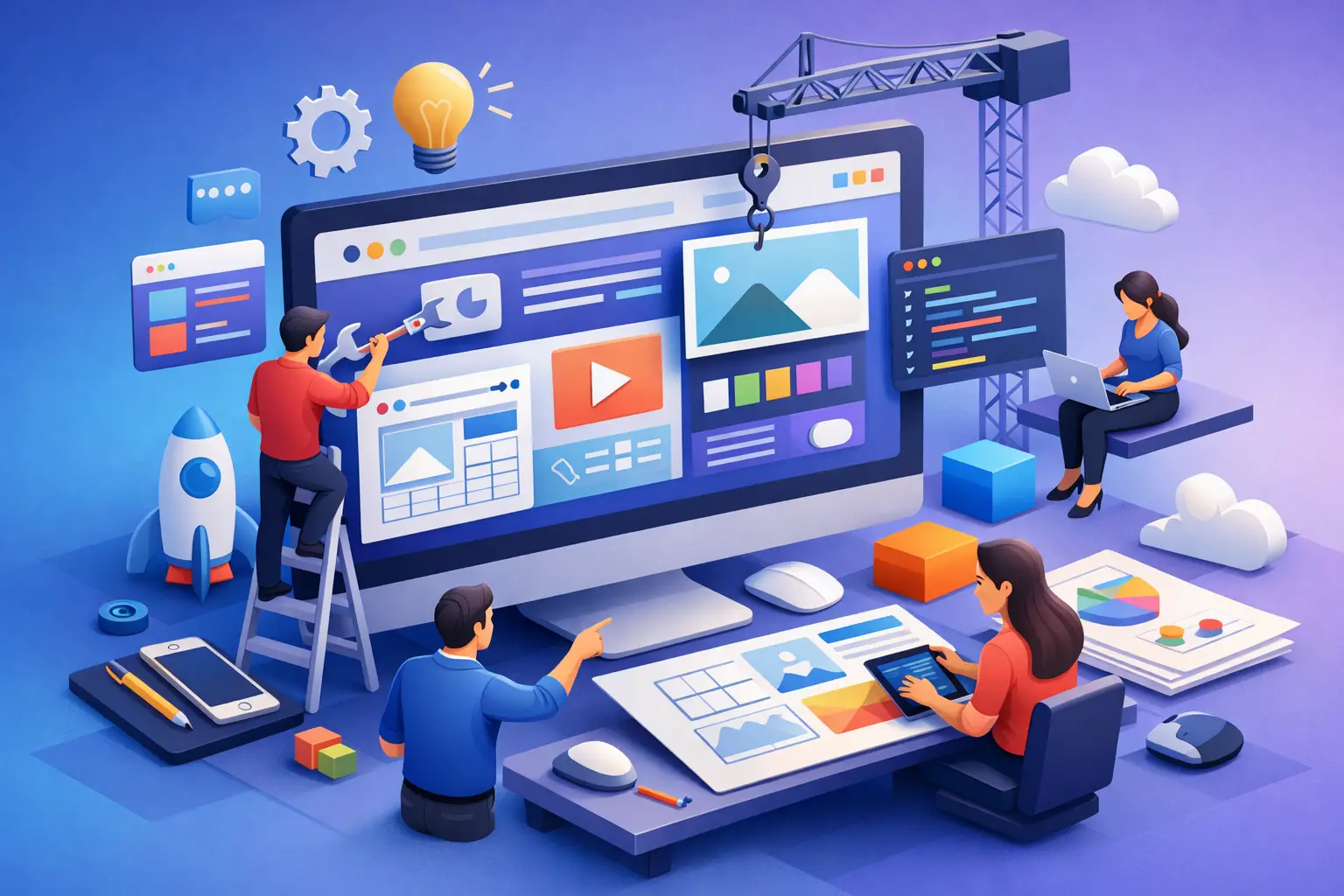
The web design and development process is the structured path used to plan, design, build, test, and launch a website. It brings together strategy, user experience, visual branding, content, technical development, and performance goals so the final site does more than just look good.
For growing businesses, this process should connect directly to outcomes. That means stronger local visibility, better search rankings, cleaner brand presentation, easier navigation, and more conversions. Good design attracts attention. Good development makes the experience fast, functional, and reliable. The best results happen when both are guided by a business strategy from the start.
The process begins with discovery, not design
Before any layout is created, the first stage is discovery. This is where the business defines what the website needs to accomplish. A local service company may need more calls and quote requests. An ecommerce brand may need smoother product discovery and checkout flow. A company with weak visibility may need a site structure built around SEO from day one.
This stage usually covers target audience, competitors, service priorities, current website issues, brand positioning, and conversion goals. It also identifies practical constraints like timeline, content availability, platform choice, and integrations.
Skipping discovery is one of the most expensive mistakes in web projects. It creates a site that may look polished but lacks direction. A website without strategic planning often ends up misaligned with customer intent, which hurts both traffic quality and conversion rates.
Strategy and site architecture shape the foundation
Once the goals are clear, the next step is strategy. This is where the website starts taking shape on paper before it takes shape on screen. Teams define the sitemap, user journeys, content priorities, and page hierarchy.
This part is less flashy than design, but it has a major impact on performance. If visitors cannot quickly find services, pricing cues, contact points, or product categories, design alone will not save the experience. The same goes for SEO. Search visibility depends heavily on site structure, page targeting, internal organization, and content planning.
For example, a business trying to rank for multiple services across different markets needs a site architecture that supports that growth. A smaller business with one main offer may need a leaner structure focused on clarity and speed. There is no single right blueprint. It depends on the company’s goals, audience, and expansion plans.
Design turns strategy into a brand experience
This is the stage most people picture first. Web design translates the strategy into visuals and interface decisions. That includes layout, typography, color, imagery, button styles, spacing, and mobile responsiveness.
Strong web design is not decoration. It guides attention, supports credibility, and makes the next step obvious. A well-designed service page should help a visitor understand what you do, why it matters, and how to contact you without friction. A well-designed ecommerce page should reduce hesitation and make product evaluation easier.
This is also where brand consistency becomes critical. If your site looks disconnected from your logo, social presence, photography, or in-store experience, trust drops. Businesses that want a competitive edge need design that feels intentional across every touchpoint.
There is also a trade-off here. Highly custom design can create stronger brand distinction, but it may require more time and budget. Template-based approaches can be faster and more affordable, but they often limit flexibility and make it harder to stand out. The right choice depends on your growth stage and how important differentiation is in your market.
Content is part of the process, not an afterthought
Many website delays happen because content is treated as something to “add later.” In reality, content drives structure, messaging, and SEO value. That includes headlines, body copy, calls to action, service descriptions, product information, FAQs, and image direction.
Good website content speaks to both people and search engines, but people come first. Your message needs to be clear, specific, and aligned with buyer intent. If a visitor lands on your page and still has to guess what you offer or why they should trust you, the page is underperforming.
Content also influences conversions more than many businesses expect. The wording around a contact form, service promise, or product benefit can affect whether someone takes action. This is why the best web projects treat copywriting as a core part of the build, not just filler between design sections.
Development brings the website to life
After strategy, design, and content direction are approved, development begins. This is where the static concept becomes a functioning website. Developers build templates, code features, configure content management systems, optimize mobile behavior, and connect tools like forms, ecommerce systems, analytics, and booking platforms.
This is the technical backbone of the project. It affects page speed, security, responsiveness, scalability, and how easy the site is to manage after launch. A beautiful website that loads slowly or breaks on mobile is a liability, not an asset.
Development choices also affect future marketing performance. If your website is built in a way that makes it hard to update content, improve metadata, publish landing pages, or track conversions, growth becomes harder. That is why experienced agencies look beyond launch day and build with long-term marketing execution in mind.
For many businesses, WordPress or Shopify makes sense because they balance flexibility with usability. But platform choice should follow business requirements, not trends. A service-led business, a content-driven brand, and a retail store all have different needs.
Testing is where quality control protects your investment
Before launch, the site should be tested carefully across devices, browsers, screen sizes, and user paths. This stage checks for broken links, layout issues, slow-loading pages, form errors, mobile usability problems, and content inconsistencies.
It is also the time to review SEO basics such as page titles, metadata, indexing settings, image optimization, heading structure, redirects, and analytics tracking. If these details are ignored before launch, businesses can lose visibility right out of the gate.
Testing may not feel exciting, but it protects your investment. It helps ensure that the experience is polished for real users, not just approved in a design file.
Launch is the starting line, not the finish line
A website launch is a milestone, but it should not be treated like the end of the project. Once the site goes live, the real performance data starts coming in. You can see how people navigate, where they drop off, which pages convert, and what needs improvement.
This is where smart businesses gain momentum. They refine calls to action, strengthen content, improve page speed, expand SEO pages, and adjust based on user behavior. Websites that drive consistent growth are usually managed as evolving business assets, not one-time creative projects.
This matters even more in competitive markets. If your competitors are updating service pages, improving local search presence, and strengthening their user experience while your site stays static, your visibility can stall.
Why the process matters for growth
The reason people ask what is web design and development process is usually not academic. They want to know why a professional website takes time, planning, and cross-functional thinking. The answer is simple: every stage affects results.
If strategy is weak, the site lacks direction. If design is weak, trust drops. If content is weak, messaging falls flat. If development is weak, usability and performance suffer. When these pieces are aligned, your website becomes a stronger platform for search visibility, lead generation, ecommerce sales, and brand authority.
That is also why working with a team that understands branding, development, and digital marketing together can create better outcomes than managing disconnected vendors. A website performs better when design choices, SEO structure, and conversion goals are built to support each other from the start.
For businesses that want more than just an online presence, the process matters as much as the final product. A site should not only represent your business. It should help move it forward.
The best website projects create clarity before they create pages. If you start with the right strategy, every design and development decision has a job to do – and that is where real growth begins.