A slow website, outdated design, and weak search visibility cost more than clicks. They cost calls, form submissions, store visits, and trust. That is why working with a web design and development agency is not just about getting a better-looking site. It is about building a stronger digital presence that helps your business compete, get found, and convert more of the traffic you already earn.
For many small and mid-sized businesses, the website becomes the center of everything. Your ads send people there. Your Google Business Profile supports it. Your social content points back to it. Even referrals often check it before they call. If the experience feels dated, confusing, or inconsistent with your brand, growth slows down fast.
Why a web design and development agency matters
A business website has to do more than exist. It needs to represent your brand clearly, load quickly, work on every device, and guide visitors toward action. That action might be a phone call, a quote request, an appointment, or a purchase. If your site is not built for that outcome, you are leaving revenue on the table.
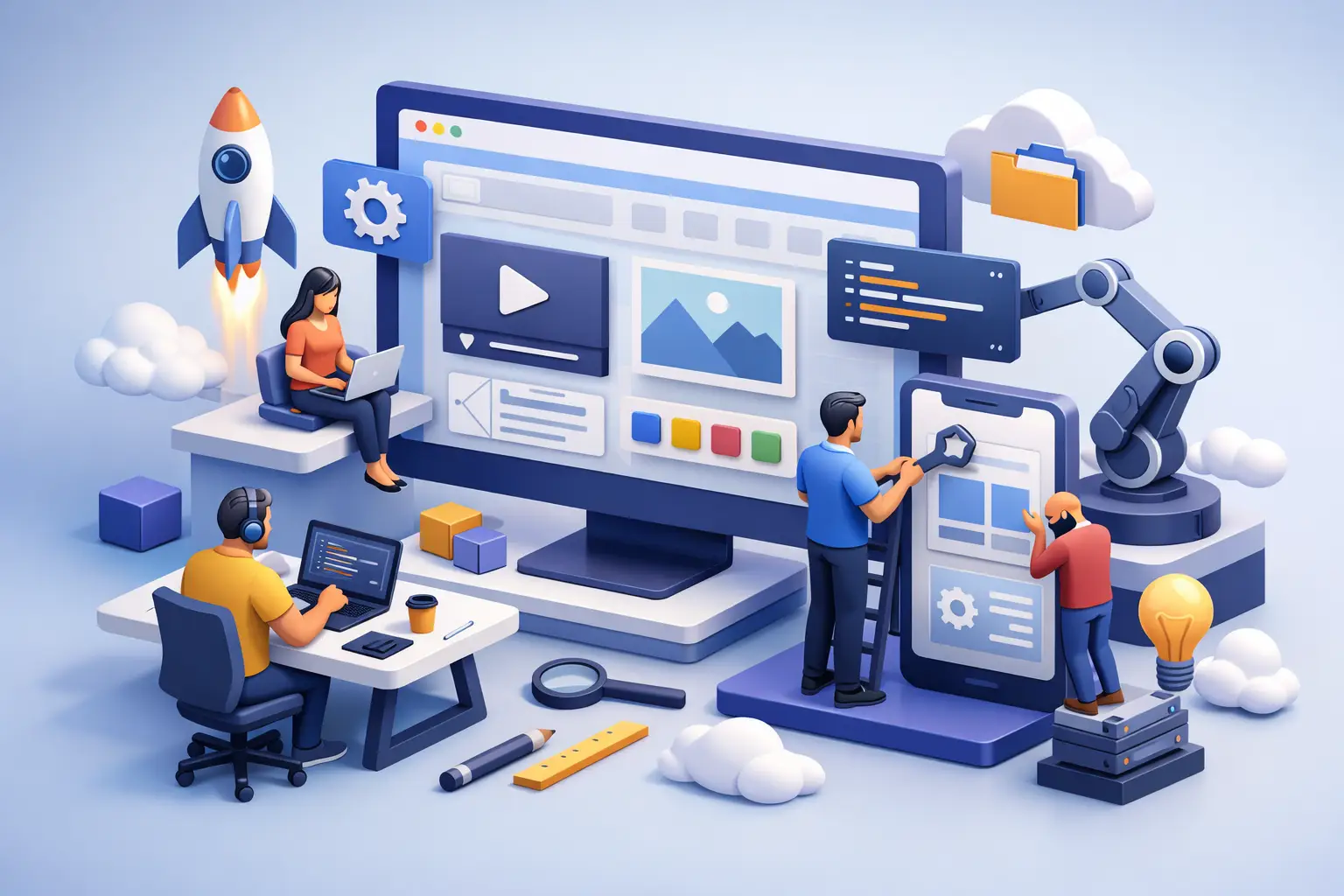
This is where a web design and development agency creates real business value. Design shapes first impressions and trust. Development makes the site functional, stable, and scalable. Strategy connects both to actual business goals.
A freelancer may handle the visual side well. A developer may build the technical framework well. But businesses often need more than one skill set. They need messaging, SEO structure, conversion thinking, mobile usability, platform expertise, and a brand presentation that feels polished from the first click. The real advantage of an agency model is alignment. Instead of patching together separate vendors, you get a more connected system.
Design is about conversion, not decoration
A lot of business owners have been sold on the idea that a website redesign is mainly a visual upgrade. Better colors, better photos, cleaner pages. Those things matter, but only if they improve clarity and action.
Strong design helps people understand who you are, what you offer, and what they should do next. It removes friction. It supports trust. It makes pricing, services, locations, and next steps easier to find. Good design can absolutely elevate a brand, but the point is not to impress other designers. The point is to move customers closer to a decision.
That often means making practical choices instead of flashy ones. Clean navigation usually outperforms clever navigation. Clear calls to action usually beat vague slogans. Consistent branding usually does more for conversion than trendy effects. It depends on your industry and audience, but in most cases, simplicity with purpose wins.
Development is what makes the site perform
Design gets attention. Development determines whether the experience actually works.
A well-developed website should load quickly, adapt to phones and tablets, support search visibility, and make updates manageable. It also needs clean code, platform stability, secure functionality, and room to grow as your business changes. If you are adding ecommerce, booking tools, custom forms, service-area pages, or local landing pages, development choices matter even more.
This is also where many businesses run into trouble. A site may look fine on the surface but perform poorly underneath. Pages may be heavy and slow. Mobile layouts may break. Plugins may conflict. Content management may be frustrating. Search engines may struggle to crawl key pages. You do not always see these issues right away, but your customers and rankings feel them.
That is why design and development should never be treated as separate conversations. The best outcomes happen when both are built around visibility and performance from the start.
What businesses should expect from a web design and development agency
The right agency should bring more than technical delivery. It should bring business perspective.
First, there should be a clear discovery process. Before layouts or code, the agency should understand your audience, market position, services, and growth goals. A local service company needs a different site strategy than a retail brand. A lead generation website should not be structured like an online catalog. An ecommerce brand may need stronger product filtering, checkout flow, and mobile shopping performance. Strategy should shape the build.
Second, the agency should think about visibility, not just launch. A website without search structure, local relevance, and content planning may look polished while still underperforming. That does not mean every site needs a huge SEO buildout on day one. It does mean the foundation should support search growth instead of creating technical obstacles.
Third, the agency should care about conversions. That includes page hierarchy, calls to action, trust signals, forms, contact options, service messaging, and user flow. If your business depends on leads, your site should make it easy for people to contact you without hunting for basic information.
Finally, the agency should build for maintainability. A website is not a one-time event. Businesses evolve. Promotions change. New services launch. Teams need the ability to update content without breaking the site every time they touch it.
One partner often outperforms a fragmented setup
Many companies start with a pieced-together approach. One person handles the logo. Another builds the website. Someone else runs SEO. Social media is managed separately. Photos are sourced later. The result is usually inconsistent branding, mixed priorities, and slower progress.
A full-service approach creates a stronger advantage because each part supports the others. Your brand identity informs the website. The website supports SEO. SEO brings qualified traffic. Photography and video improve credibility. Messaging stays consistent across pages and campaigns. Instead of disconnected tactics, you get a growth system.
That does not mean every business needs every service at once. Budget, timing, and internal resources all matter. But when design, development, branding, and digital marketing work together, performance tends to improve faster and with less friction.
For businesses trying to increase visibility and convert more traffic, that coordination matters. It saves time, reduces rework, and creates a clearer path from awareness to action.
How to tell if your current site is holding you back
Some website problems are obvious. Others hide in plain sight.
If your site looks outdated compared with competitors, that is one signal. If traffic comes in but leads stay flat, that is another. If customers say they could not find key information, or if your pages are hard to use on mobile, the issue is already affecting revenue. Slow speed, inconsistent branding, weak local visibility, low search rankings, and poor ecommerce performance are all signs the foundation needs attention.
There is also a brand issue to consider. Businesses often invest in quality service, strong teams, and real customer experience, but the website does not reflect any of it. That gap creates doubt. People judge credibility quickly online, especially when comparing multiple providers in the same market.
A stronger website closes that gap. It gives your business a sharper presentation, a clearer message, and a better chance to stand out.
The best agency fit depends on your goals
Not every business needs the same kind of agency support.
If you need a brochure-style site with basic brand credibility, your priorities may be speed, visual polish, and clear service pages. If you rely on search traffic, SEO structure and local landing pages become more important. If you sell online, platform expertise, product experience, and conversion optimization move higher on the list. If your brand feels inconsistent, you may need stronger creative direction before the website is rebuilt.
That is why the best agency relationship is rarely based on design taste alone. It is based on business fit. Can the agency understand your market, build the right platform, support visibility, and connect the site to measurable growth? That is the real question.
For businesses that want more than a website template and need a stronger presence across branding, search, and digital marketing, agencies like Ramikar offer a more integrated path forward. The value is not just in building pages. It is in creating a digital foundation that helps your business get seen, earn trust, and convert attention into action.
A good website should make growth easier. If yours is doing the opposite, that is your signal to stop treating it like a placeholder and start treating it like a business asset.